Origin Property Public Company Limited has conducted its business in alignment with the sustainable development guidelines of the Stock Exchange of Thailand, covering environmental, social, and corporate governance (ESG) aspects. The company is committed to developing high-quality projects and delivering products and services that meet customer needs, while driving sustainable organizational growth under principles of good corporate governance and with responsibility toward society and all stakeholders.
The Company established policies and practice guidelines for energy conservation and environmental protection as part of its business operations starting from the land acquisition process, project design process, procurement process, to the construction and project development process. This also included the management process of the juristic projects that the Company provided management services in order to ensure that all processes and resources were properly and effectively managed without causing any impact on the environment. Every stakeholder group participates in management operations to achieve the intended goal of Net Zero Emissions, starting with the promotion of knowledge, creating awareness of environmental management among personnel in the organization and giving importance to operations and management of natural resources, energy, waste, including climate, environment, and biodiversity to achieve maximum benefit and efficiency systematically and sustainably. In order to achieve its goals, the Company has established a sustainability and the environment working group, responsible for the organization’s environmental operations, as well as establishing the Corporate Governance and Sustainability Committee to be responsible for overseeing sustainability and environmental operations in accordance with the Company’s policies and achieving the goals set forth
Guidelines for Natural Resource, Energy, Waste and Environment Management
Environmental goals and performance for 2025
Indicators | Goal in 2026 | Operations performance 2025 |
Power management (Scope 1,2) | Reduce greenhouse gas emissions by 5 percent compared to the base year. | Target: Reduce greenhouse gas emissions by 5% compared to the base year. Performance: Energy management achieved a 35% reduction (measured in tCO₂e per square meter). |
Electricity management | Reduce the organization’s electricity consumption for both the head office and sales office by 5 percent compared to the base year. | Target: Reduce electricity consumption by 5% compared to the base year. Performance: Achieved a 35% reduction. |
Water management | Reduce the amount of tap water used by the organization at both the head office and sales offices by 5 percent compared to the base year. | Target: Reduce water consumption by 5% compared to the base year. Performance: Increased by 30%. |
Waste Management | Reduce waste at the head office by 5%. | Performance: Decreased by 1% compared to the base year. |
Reducing air pollution | Control the quality of machinery used in construction in the project to be within standard criteria. Dust particles sized not more than 2.5 microns, not more than 0.05 milligrams per cubic meter, and the number of times air pollution emissions exceeding the standard is zero | Within the target range |
Reduce the amount of dust in construction projects | All projects | All projects |
“The greenhouse gas emissions verification is currently under review by Bureau Veritas Certification (Thailand) Co., Ltd.”
Operational Approach
Performance Results
The Company collected data on electricity consumption and fuel energy usage from sources arising from its operational activities. In 2025, the Company gathered data on fuel consumption from company-owned vehicles as well as fuel used for business-related travel. In addition, electricity consumption was monitored at the head office of Origin Property Public Company Limited and 28 sales offices operating during the year. The total energy consumption amounted to 3,436,105.70 kWh
Total electricity usage | Electricity quantity (kilowatt kWh ) | 2023 | 2024 (Base Year) | 2025 |
Origin Property Public Company Limited Head Office (kWh) | (kilowatt/hour/year) | 168,263 | 167,351 | 157,300 |
Number of Sales Offices | Units | 40 | 52 | 28 |
Total Sales Office Electricity Consumption (kWh) | (kilowatt/hour/year) | 10,108,501.06 | 2,859,825.13 | 3,278,805.70 |
Total electricity usage (kWh) | (kilowatt/hour/year) | 10,276,764.06 | 3,027,176.13 | 3,436,105.70 |
Output | (sq.m.) | 17,295.53 | 23,478.59 | 69,153 |
Fuel Consumption | liter | 30,959.77 | 21,261.03 | 47,476.77 |
“The greenhouse gas emissions data for 2025 is currently undergoing verification by Bureau Veritas Certification (Thailand) Ltd..”*
The key initiatives are as follows:
Through the implementation of the aforementioned energy management plan, the Company remains committed to continuously improving energy efficiency. The Company has set a target to reduce energy consumption by at least 5% by 2026, compared with the established base year.
The Company places strong importance on the efficient and sustainable management of water resources, covering both the head office and construction project sites. Water management practices are guided by the 3R principle (Reduce, Reuse, Recycle), similar to the Company’s waste management approach, in order to ensure that water resources are utilized efficiently and provide maximum benefit.The Company has established guidelines and campaigns to promote the responsible use of water, including encouraging the use of water-saving equipment and sanitary fixtures. In addition, clear operational guidelines and strict control measures for water consumption have been implemented across all departments. The Company also organizes communication activities and educational initiatives to enhance employees’ knowledge and understanding of efficient water use, fostering awareness and a sense of responsibility throughout the organization.Furthermore, the Company conducts risk management related to water resources, regularly assessing and monitoring risks associated with potential water scarcity. Preventive measures and contingency plans have been established to mitigate potential impacts arising from water shortages in the future, while strengthening the Company’s long-term water resource security in a sustainable manner.
Operational Approach
The Company has established comprehensive water resource management practices covering water use planning, water conservation, and water sourcing across all business operations, including corporate offices, construction projects, and residential developments throughout the Group.The Company recognizes the importance of effective water stewardship by implementing robust water management, monitoring, and risk assessment processes related to both water consumption and wastewater discharge. To ensure business continuity in the event of water shortages, the Company has developed contingency plans and implemented appropriate measures to enhance preparedness and maintain uninterrupted operations.
In 2025, the Company established a target to reduce internal water consumption by 5% compared with the baseline year, covering the head office and 28 sales offices operating during the year. In 2026, the Company remains committed to achieving a further 5% reduction in water consumption while continuing to improve water management efficiency through various initiatives, including the following:
Performance Results
In 2025, the Company collected data on water consumption covering operations at the head office of Origin Property Public Company Limited and 28 sales offices operating during the year. The total water consumption amounted to 125,872 cubic meters. *The greenhouse gas emissions data is currently undergoing verification by Bureau Veritas Certification (Thailand) Ltd.
Total water usage | Units | 2023 | 2024 (Base Year) | 2025 |
Number of Sales Offices | แห่ง | 40 | 52 | 28 |
Total Sales Office Water Consumption | m3 | 141,581 | 40,666 | 125,706 |
Origin Property Public Company Limited Head Office | m3 | 154 | 154 | 166 |
Total water usage (m3) | m3 | 141,735 | 40,820 | 125,872 |
Water consumption and water withdrawal for the Company’s operational activities, categorized by source, are as follows:
Total water usage | Units | 2023 | 2024 (Base Year) | 2025 |
Total Water Withdrawal |
| |||
Surface Water | Cubic meter (m³) | 0 | 0 | 0 |
Groundwater | Cubic meter (m³) | 0 | 0 | 0 |
Tap Water | Cubic meter (m³) | 141,735 | 40,820 | 125,872 |
External wastewater | Cubic meter (m³) | 0 | 0 | 0 |
Rainwater Collected | Cubic meter (m³) | 0 | 0 | 0 |
Seawater | Cubic meter (m³) | 0 | 0 | 0 |
Total Water Discharge |
|
|
|
|
Surface Water | Cubic meter (m³) | 0 | 0 | 0 |
Groundwater | Cubic meter (m³) | 0 | 0 | 0 |
Tap Water | Cubic meter (m³) | 0 | 0 | 0 |
External wastewater | Cubic meter (m³) | 0 | 0 | 0 |
Rainwater Collected | Cubic meter (m³) | 0 | 0 | 0 |
Internal Water Management
The Company promotes the efficient use of water among employees by organizing campaigns and raising awareness within the organization to encourage water conservation and avoid behaviors that may lead to unnecessary water consumption. For example, employees are encouraged to separate food waste to prevent blockages in the drainage system.
Regular inspections of potential leakages in water fixtures and sanitary equipment within the office are conducted by the building maintenance team. In addition, responsible personnel and departments have been assigned, along with clear reporting channels for employees to notify the Company if any water leakage is detected, ensuring that issues can be addressed and resolved promptly.
Water management in construction project
The Company places great importance on water management in construction projects throughout all operational processes. A policy has been established requiring contractors in all projects under construction during the year to implement water management practices, including the establishment of wastewater treatment systems, as well as the control and monitoring of water quality prior to discharge into public water systems in compliance with applicable laws and regulations. In 2025, there were 11 projects under construction that implemented water management measures in accordance with the Company’s construction project water management policy. These projects followed a set of common operational principles and practices, as outlined below:
In 2025, none of the 11 construction projects undertaken by the Company were located in water-stressed or water-scarce areas.
Total Projects | Number of Projects Located in Water-Stressed / Water-Scarce Areas |
11 | 0 |
Water Management in Residential Projects
The Company places strong emphasis on the efficient management of water resources, beginning from the project design stage through development and the selection of products used in new projects. The Company carefully plans and selects water-saving sanitary fixtures that are certified with recognized water conservation labels, including fixtures for toilets and wash basins.
These sanitary products are designed to control water usage at appropriate levels, reducing unnecessary water consumption while maintaining effective functionality. This approach helps promote the efficient use of water resources and supports environmentally friendly practices.
The Company has adopted water-efficient sanitary fixtures as a standard across all projects to support long-term environmentally sustainable project development. For example, wash basin faucets with a flow rate of 4.8 liters per minute (4.8 L/min) are used. These fixtures consume only 4.8 liters of water per minute, compared with conventional faucets that typically use 6 liters per minute, resulting in water savings of 1.2 liters per minute, or approximately 20%.
In addition, these products are designed to control contamination from heavy metals, such as lead, cadmium, copper, and zinc, which may be harmful to human health and the environment. The use of such sanitary fixtures therefore contributes to efficient water management while ensuring environmental safety, and these fixtures have been implemented across all Company projects.
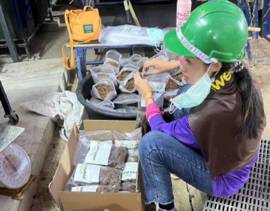
Waste Management in the Office. The Company places importance on effective waste management and waste reduction within the office, while fostering awareness and understanding among employees and relevant stakeholders. Waste separation stations are provided according to waste categories, and recyclable waste is properly collected and sent for appropriate recycling processes. In addition, employees are encouraged to implement the 5S workplace management practices within their respective work areas.
Furthermore, the Company organizes various activities and campaigns to raise awareness among employees regarding waste segregation and the reduction of plastic use, such as plastic bottles and plastic bags, in order to reduce overall waste generation. The Company also donates unused items to underprivileged groups or social foundations, including the Nok Khamin Foundation, Green Road, and the Mirror Foundation. These initiatives not only support social causes but also contribute to reducing the amount of waste generated within the organization.
Plastic Waste Management Campaign
Finish Your Drink, Donate the Cap” campaign to support the Green Road Project, an initiative that collects plastic bottle caps for recycling and transforms them into materials used to manufacture desks and chairs. These are then donated to schools and students in rural and underserved communities, creating positive environmental and social impacts
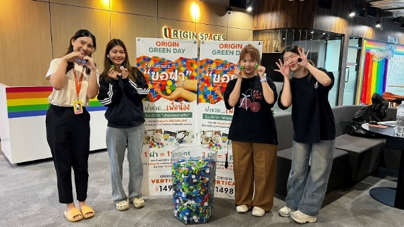
Through this campaign, the Company donated more than 30,000 plastic bottle caps to the Green Road Project. The collected caps were recycled into over four sets of desks and chairs for donation to schools.
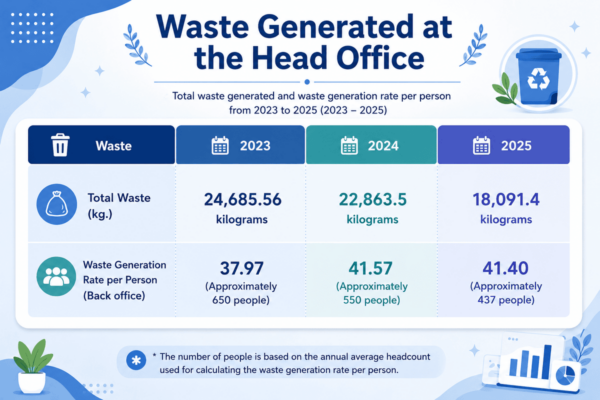
Based on historical waste generation data at the Company’s Head Office, the Company recognized the need to address the increasing volume of waste generated each day. As a result, the Company launched the “Go Green & Go Digital” campaign to reduce the consumption of paper and single-use plastic water bottles within the office, as these constitute the largest proportion of office waste. The campaign aims to minimize waste generation while promoting more efficient and responsible use of natural resources.
The Company remains committed to reducing the waste generation rate per employee at its offices by 5% by 2026, compared with the 2024 baseline year, through continuous waste reduction initiatives and the promotion of sustainable workplace practices.
Waste and pollution management in construction projects
The Company has established measures for construction projects to be implemented by contractors, placing emphasis on the systematic management of waste and materials generated from construction activities in accordance with the 3R principles (Reduce, Reuse, Recycle). An effective waste segregation system by waste type has also been implemented, alongside efforts to raise awareness and encourage participation among all relevant stakeholders. The Company has established the following measures and operational practices for all construction projects:
1. Waste management measures and guidelines within the project are announced for contractors
2. The waste and construction material installation point and collection point for have been determined in the project clearly
3. Create waste collection points on every floor of the building to facilitate separation and moving
4. Create waste separation public relations board within the project
5. Collaborate with contractors to bring prefabricated material parts and assembled parts from the manufacturer to use in the project
6. Arrange for personnel to inspect and control the residual waste collecting operation every day.
7. Waste management within workers’ houses
8. The waste quantity table has been conducted and continuously monitor performance results.
9. Construction Waste Management
Through these initiatives, the Company seeks to strengthen environmental management across its construction projects by ensuring compliance with established environmental standards through the active participation of both contractors and employees. The Company also collaborates with stakeholders to identify opportunities for integrating Circular Economy principles into construction processes, with the aim of improving resource efficiency, reducing waste, and promoting sustainable construction practices.
Recycling of Construction Waste
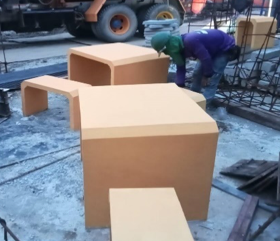
The Company recognizes the importance of effective construction waste management. To reduce waste generation and promote efficient resource utilization, the Company initiated a program to reuse leftover concrete from construction sites. This initiative aims to minimize waste disposal, reduce resource loss, and support the implementation of Circular Economy principles within project operations. Under this initiative, leftover concrete from construction processes is repurposed into functional products for use within project areas, such as tables, benches, parking barriers, and precast walkway slabs. These applications help reduce the need for new materials while maximizing the value of existing resources. The initiative has also been extended to support community engagement through the Company’s CSR activities. Reused concrete has been molded into blocks for vegetable plot borders and donated to under-resourced schools. These plots serve as learning spaces for students to develop practical agricultural skills and promote self-reliance.
In 2025, the Company successfully reused approximately 3 cubic meters of leftover concrete, which were utilized to create 10 learning vegetable plots, each requiring 60 concrete blocks. Through the reduction of waste transportation and disposal, as well as the decreased need for new material production, the initiative contributed to an estimated reduction of approximately 900 kilograms of carbon dioxide equivalent (kgCO₂e) per year.
Beyond reducing environmental impacts from construction waste, the initiative also creates social value by supporting experiential learning for students, promoting agricultural skills, responsibility, and efficient resource use, in line with the Company’s commitment to sustainable business practices.
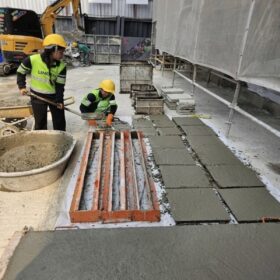
Construction Waste and Waste Management Initiative
The Company collaborates with contractors to implement a systematic waste management awareness program for construction workers within project sites. The initiative focuses on enhancing knowledge, understanding, and awareness of the environmental, health, and safety impacts associated with improper waste disposal, while communicating the benefits of proper waste segregation.
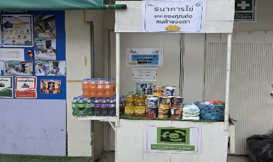
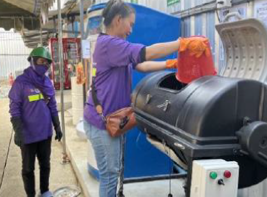
Training sessions and internal communications are conducted within construction projects to ensure that workers understand different types of waste, appropriate segregation methods, and opportunities for waste reuse. In addition, clearly designated and sufficient waste segregation points are provided throughout project areas to facilitate proper waste separation and encourage continuous participation.One of the key activities implemented under this initiative is the “Waste for Eggs program”, which allows construction workers to exchange properly segregated recyclable waste, such as plastic bottles and paper, for eggs or other daily necessities. This activity not only encourages consistent waste segregation practices but also provides additional financial support and helps reduce living expenses for workers.
Furthermore, the Company has initiated the establishment of dedicated food waste segregation points, as food waste represents another significant waste stream generated within construction sites. The collected food waste is processed into organic compost, which can be reused within project areas for landscaping and green space maintenance. The compost may also be sold to generate additional income or donated to nearby communities or temples. Through this initiative, the Company aims to integrate environmental management with social value creation by promoting responsible waste management practices while supporting the well-being of construction workers and surrounding communities.
For 2025–2026, the Company has established clear targets for waste management in construction projects. The Company aims for 100% of construction projects each year to implement proper waste segregation and recycling practices, ensuring a consistent waste management standard across all project sites.In addition, the Company strives to ensure that all employees and construction workers within project sites are equipped with adequate knowledge and understanding of the benefits and importance of proper waste segregation. As part of the Company’s short-term targets, by 2028, 100% of construction projects will implement food waste management practices, ensuring that food waste generated within project sites is properly segregated and managed in an environmentally responsible manner.
Using environmentally friendly materials
The Company places importance on product quality, safety and the environment by supporting materials that are environmentally friendly. This is one of the guidelines that the Company used to develop the organization’s energy efficiency and reducing environmental impacts arising from its business operations.
The Company prioritizes the selection of suppliers and contractors whose operations are aligned with its environmental policy. Preference is given to materials, equipment, and products certified by recognized environmental standards or eco-labeling schemes, reflecting their environmentally friendly and energy-efficient attributes. This approach ensures that materials used in construction projects meet quality and safety requirements while minimizing environmental impacts throughout their lifecycle.

In 2025, the Company procured environmentally friendly products and materials from suppliers and manufacturers certified under relevant standards. These include products carrying environmental labels or energy efficiency certifications, which were utilized in the Company’s construction projects. The Company has established procurement guidelines and material specifications that prioritize low-carbon materials to support environmentally responsible construction practices. For example is the adoption of TEXCA Wall, a construction material certified under the Thai Industrial Standards (TIS), ISO 9001:2015, and recognized for its environmental performance through the Green Label certification issued by the Thailand Environment Institute. This material was implemented across all construction projects developed in 2025. During the year, environmentally friendly materials accounted for approximately 10% of the total materials used in the Company’s construction projects. The Company has established a procurement plan to further promote the use of environmentally friendly materials and has set a target to maintain the use of such materials at no less than 10% of total materials used in construction projects In 2025.
In addition, the Company continues to promote the use of renewable energy in its projects. The Company has set targets to integrate energy-efficient technologies and equipment—such as solar rooftop systems and high-efficiency energy-saving devices—into new projects. To support this initiative, the Company has developed an implementation plan and allocated appropriate budgets to increase investment in energy-saving technologies and renewable energy solutions, contributing to the reduction of energy consumption and supporting the transition toward cleaner energy.
Greenhouse Gas Management and Climate Change Mitigation
The Company recognizes the potential impacts arising from climate change and is committed to addressing this challenge by prioritizing the management and reduction of greenhouse gas (GHG) emissions. The Company establishes targets and conducts risk assessments across all operational processes to minimize activities that may contribute to environmental impacts and to reduce external impacts as much as possible. Each year, the Company collects and verifies data related to greenhouse gas emissions generated from its operations, including emissions associated with energy consumption across the organization. This data enables the Company to effectively plan and implement initiatives aimed at reducing its greenhouse gas emissions. The Company’s greenhouse gas inventory has been verified and certified by an independent third-party verifier, Bureau Veritas Certification (Thailand) Ltd., in accordance with internationally recognized standards including ISO 14064-1, ISO 14069, and the Greenhouse Gas Protocol.
Net Zero Emissions
In all operational processes, the Company places great importance on strict compliance with applicable laws, regulations, relevant practices, and standards to ensure that its operations minimize environmental impacts. The Company has also received strong cooperation from all relevant stakeholders in jointly supporting sustainable business development while prioritizing environmental protection.
To achieve its commitment toward the goal of Net Zero greenhouse gas emissions, the Company reviewed and improved its environmental performance targets in the past year. As a result, the Company has revised its Net Zero Emissions target year to 2050, in order to enhance operational effectiveness and align with Thailand’s national direction as well as global trends toward climate action and sustainability.
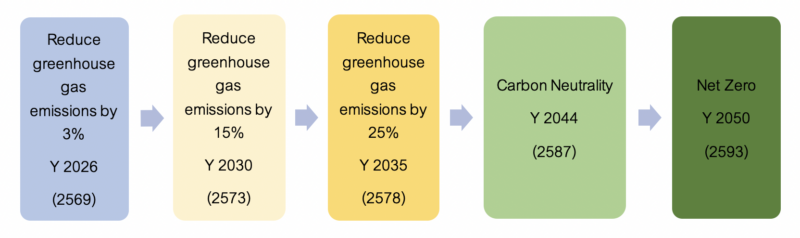
Operational Approach
Performance Results
The Company has collected and compiled data on greenhouse gas (GHG) emissions generated from its business operations across all three emission scopes. The results for 2025 are summarized as follows:
Direct Greenhouse Gas Emissions (Scope 1) Scope 1 emissions are calculated from the consumption of gasoline and diesel fuel resulting from fuel combustion in vehicles owned by the Company, totaling 8 vehicles. The calculation also includes emissions from employees’ business travel using personal vehicles for which travel expenses were reimbursed by the Company. In addition, emissions from refrigerants used in air-conditioning systems and fire extinguishers installed at various locations within the Company’s office premises are included in the Scope 1 assessment.
Indirect Greenhouse Gas Emissions from Energy Consumption (Scope 2) Scope 2 emissions are calculated based on electricity consumption within the Company’s operations. This includes electricity usage at the head office of Origin Property Public Company Limited and 28 sales offices that were in operation during 2025.
Indirect Greenhouse Gas Emissions (Scope 3)The Company also evaluates other indirect greenhouse gas emissions associated with activities across its value chain. These include emissions related to: The procurement of goods and services used in organizational operations , Fuel and energy-related activities ,Transportation of materials into the organization ,Waste management generated from organizational activities ,Business-related travel, including air travel and public transportation , Employee commuting ,Electricity consumption by office tenants at the Company’s Bearing Office building. Following the evaluation process, the Company identified significant emission sources to be reported under Scope 3. The most material category is purchased goods and services, which includes the consumption of tap water and paper within Origin Property Public Company Limited, as well as construction materials used in projects completed during the year, totaling 10 projects in 2025.
The greenhouse gas inventory for 2025 has been verified by an independent third-party verifier, Bureau Veritas Certification (Thailand) Ltd., and the summarized greenhouse gas emissions results are presented as follows.
Total GHG Emissions (tCO₂e) | 2023 | 2024 (Base Year) | 2025 |
Direct greenhouse gases (Scope 1) | 100 | 154 | 100 |
Direct greenhouse gases (Scope 2) | 5,141 | 1,514 | 1,633 |
Direct greenhouse gases (Scope 3) | 1,029 | 13,900 | 22,775 |
Total Scope 1 and Scope 2 Emissions | 5,241 | 1,668 | 1,733 |
Total Scope 1 ,2 and 3 Emissions | 6,270 | 15,568 | 24,508 |
Output (sq.m.) | 17,295.53 | 23,478.59 | 69,153 |
Carbon Intensity (Scope 1,2) | 0.3030 tCO₂e/m² | 0.0710 tCO₂e/m² | 0.0250 tCO₂e/m² |
Carbon Intensity (Scope 1 ,2และ 3) | 0.3625 tCO₂e/m² | 0.6631 tCO₂e/m² | 0.3544 tCO₂e/m² |
The Company participated in the JUMP+ Program (Enhancing the Value of Listed Companies). On 14 November 2025, the Board of Directors approved the Company’s participation in the program and endorsed the JUMP+ implementation plan prepared by the management in accordance with the program’s requirements. As part of the initiative, the Company submitted a Decarbonization Planning project to drive the organization toward becoming a low-carbon business through a structured and practical approach. The plan establishes clear guidelines, targets, and roadmaps for reducing greenhouse gas (GHG) emissions over both the short and long term, while supporting the Company’s pathway toward achieving Carbon Neutrality and Net Zero greenhouse gas emissions.By setting measurable and achievable climate targets, the Company aims to strengthen its resilience against climate-related risks while enhancing its long-term competitiveness and creating new business opportunities.Under the program, the Company has committed to reducing greenhouse gas (carbon footprint) emissions from its overall operations by 7% by 2028, compared with the 2024 baseline year. This commitment will be achieved through improved energy efficiency and sustainable resource management practices across the organization.
The Company encourages all affiliated companies, tenants, and business operators within its projects to prioritize environmental responsibility by adopting practical measures to reduce environmental impacts. These measures cover key areas including energy management, water management, waste management, and the selection of environmentally friendly materials in accordance with international standards.

The Company recognizes the importance of managing air pollution caused by dust from construction activities in accordance with legal requirements. Therefore, measures have been implemented to manage dust within the project, ensuring that contractors are informed and strictly comply with these measures. Additionally, standardized tools are used for dust monitoring, recording, and regular monthly reporting. Dust levels within the project site and surrounding areas are measured and the results are compiled and reported to the Office of Natural Resources and Environmental Policy and Planning (ONEP) within the specified timeframe. Clear and visible project signage is displayed during construction, and processes are continuously developed and improved for efficiency. Regular inspection plans for related equipment are also in place.
During the year, the Company has measured environmental quality in the office and around the establishment at least once a month. It was found that the air quality standard, odor, and sound were within normal limits as required by law and there were no cases of chemical leaks from business operations. The project guidelines are as follows:
1.Water spray around the project and the surrounding fenceto help reduce dust problem from spreading and having a negative effect on surrounding communities and in order not to cause air pollution that exceeds the specified standard.
2.Spray the entrance-exit and sprinkle water on the areas within the project to reduce dust on a daily basis. Additionally, the Company ensures that all material piles and trucks entering and exiting the project site are covered to prevent dust from spreading during transportation. A designated area for washing equipment, truck tires, building floors, around the building, and the area in front of the project is maintained at all times.
3.Dust monitoring equipment has been installed both inside and outside the project site. Additionally, machinery is regularly inspected to ensure it is in good working condition to prevent the release of toxic smoke into the air. Black smoke levels are measured, and air quality is monitored monthly. Measures to prevent and mitigate air quality impacts are continuously followed up on to ensure compliance with the standards set by the National Environmental Board. Dust measurements are taken for Total Suspended Particles (TSP), particulate matter of 10 microns or less (PM-10), carbon monoxide (CO), total hydrocarbons (THC), nitrogen dioxide (NO2), and sulfur dioxide (SO2).
Example of gas measurement report within the project and nearby areas

ข้อมูลเปรียบเทียบเฉลี่ยการปล่อยมลพิษทางอากาศสำหรับโครงการที่มีการก่อสร้าง ระหว่างปี 2565-2567 | ||||
No. | ก๊าซ | Year | ||
2022 | 2023 | 2024 | ||
1 | Total Suspended Particulates (TSP) | 0.065 | 0.070 | 0.061 |
2 | Particulate Matter less than 10 Micrometers (PM-10) | 0.04 | 0.045 | 0.033 |
3 | Carbon Monoxide (CO) | 1.765 | 1.887 | 1.665 |
4 | Nitrogen Dioxide (NO2) | 0.02 | 0.024 | 0.014 |
5 | Sulfur Dioxide (SO2) | 0.07 | 0.005 | 0.011 |
6 | Total Hydrocarbon (THC) | 2.637 | 2.784 | 2.452 |
The Company has been monitoring air quality data from the Pollution Control Department and the Environment Office of Bangkok to stay informed about the air quality around the project site, including particulate matter levels of 2.5 microns or less (PM2.5). If the concentration level is at risk of exceeding the standard value of 37.5 micrograms per cubic meter, which may pose health risks, the Company will immediately take control and implement preventive measures. These include activities that use machinery and vehicles powered by diesel engines, such as construction material transportation, cutting, drilling, grinding, and polishing concrete surfaces that generate dust. The goal is to ensure that the dust levels do not exceed legal standards. In the past year, there have been no incidents of pollution exceeding the set limits. The Company has also set a goal to reduce air pollution from particulate matter of 2.5 microns or less to no more than 0.05 milligrams per cubic meter and aims for zero instances of air pollution exceeding the standard in the coming year, to improve the environment and prevent waste emissions.
Measures to Prevent Impacts on the Community and Neighboring Homes Resulting from Construction.
Noise Management
Standard tools and machinery are provided, along with equipment to reduce noise at the source. Personnel are assigned to closely monitor and control operations that generate loud noise at all times. Work hours are regulated, and clear guidelines for material transportation are established to minimize the impact on residents. Noise monitoring equipment is installed both inside and outside the project site to ensure that noise levels remain within the prescribed standard limits.
Falling and Flying Materials
Equipment is installed to prevent concrete splashes and paint from affecting neighboring houses. Lifting and transportation equipment for materials is regularly inspected. Skilled personnel are assigned to operate and supervise lifting and material handling equipment at all times to prevent potential hazards. Staff are also on hand to promptly address any impacts or complaints systematically, with regular surveys to inquire about concerns or assess damages.
Climate Change Management
The company recognizes the growing challenges posed by climate change, which has become increasingly evident and is a global issue affecting all sectors. This is especially true for the real estate industry, which is highly vulnerable to natural disasters and extreme weather conditions. It is crucial to prepare and adapt appropriately, not only to reduce risks and potential damage but also to seize opportunities for business development and sustainable growth.
The company is focused on developing innovations and business practices that are more environmentally friendly, with the goal of becoming a low-carbon organization. To ensure successful climate change management in line with its targets, the company has established a climate change governance structure. This structure clearly defines the roles and responsibilities of the CEO and the Board of Directors in driving, promoting, and monitoring environmental management within the organization. It also includes a serious assessment of climate-related risks and sets targets for managing activities that may impact current climate conditions. This involves reducing greenhouse gas emissions across all three scopes throughout the entire value chain.
Biodiversity and increasing green space
The Company is well aware that business operations may directly or indirectly impact biodiversity. Therefore, the Company is committed to conducting business with environmental responsibility by assessing risks across all work processes to identify ways to prevent and reduce negative impacts on biodiversity. Additionally, the Company strives to create positive impacts in the areas it develops, both within the projects and surrounding areas, to enhance the environment and improve the well-being of communities. The Company adheres to environmental policies to ensure sustainable biodiversity management practices, including ecosystem.
biodiversity management guidelines as follows:
Implementation of the Mitigation Hierarchy
Avoid | Minimize | Restore | Offset |
The Company avoids business activities in ecologically significant areas by refraining from project development in restricted zones, conservation areas, or legally protected sites. | -Projects are designed to incorporate tree species with high carbon absorption capacity -Measures are in place to transplant or preserve existing large trees within project areas, while ensuring that wildlife habitats are not disturbed -Projects comply strictly with environmental laws, guidelines, and standards, including preparation of Environmental Impact Assessment (EIA) reports where required. -Preventive and corrective measures are implemented to reduce environmental impacts, with continuous monitoring and compliance with EIA study results. | -The Company is dedicated to protecting, conserving, and restoring biodiversity and the environment on a broad scale through the establishment of clear management policies. -We actively support and collaborate with government agencies in initiatives to safeguard and rehabilitate ecosystems and biodiversity, including forest plantation, reforestation, and wildlife protection programs. -A notable pilot initiative is the Royal Thai Army Nature Study Center (Bang Pu) Project, launched in honor of Her Majesty the Queen’s 72nd Birthday. The project focuses on expanding forest areas through mangrove reforestation and restoring natural balance by releasing crabs into the ecosystem.
| The Company collaborates with both government and private sectors in reforestation and ecosystem restoration efforts in areas affected by biodiversity loss. |
The Company has set a target to restore and enhance biodiversity alongside project development by planting 30,000 trees within three years (2026–2028) through corporate initiatives and activities. This initiative aims to increase biodiversity-rich areas and contribute positively to the surrounding environment.In addition, the Company continues to prioritize green space in all newly developed projects. Each project designates a proportion of “sustainable green space” within legally required open areas, with at least 40% of open space allocated to sustainable green areas. This reflects the Company’s commitment to developing environmentally responsible real estate while enhancing the well-being of residents and surrounding communities. To support this objective, tree and plant species are carefully selected not only for their aesthetic value but also for their environmental benefits, such as reducing heat, mitigating air pollution, filtering particulate matter, and capturing carbon dioxide. These efforts help improve air quality within project areas and surrounding environments. Furthermore, the Company collaborates with conservation organizations to assess biodiversity outcomes and aims to generate Net Positive Impact on biodiversity by 2030.
Performance in 2025
In 2025, the Company successfully completed the construction and handover of green spaces in 10 projects, with a total green area of 20,914.57 square meters. A total of 912 trees were planted, contributing to carbon dioxide absorption within the project areas.(approximately 20 tons of CO₂ per year.) Sustainable green spaces accounted for 50% of the legally required open space, in compliance with the requirements of the Environmental Impact Assessment (EIA). The Company prioritizes the selection of tree species with high carbon sequestration capacity, such as rain trees (Samanea saman), along with other plant species that help enhance ecological balance and landscape aesthetics.These green spaces are designed to create a shaded and pleasant environment while supporting environmental sustainability and promoting residents’ well-being by bringing them closer to nature.
Green Space Summary (2025) | |||||
No. | Project | Green Space (sq.m.) | Total | Green Space (% of Open Space) | |
units | square mater | ||||
1 | Origin Plug & Play E22 Station | 3,229.84 | 93 | 946.48 | 50.37 |
2 | Origin Plug & Play Srinakarin | 1,800.57 | 102 | 490.63 | 50.9 |
3 | Hampton Rayong | 1,660.02 | 77 | 644.25 | 51.79 |
4 | Origin Plug & Play Sirindhorn Station | 3,348.20 | 117 | 1,241.23 | 63.86 |
5 | The Origin Campus Khon Kaen | 1,551.70 | 84 | 408.23 | 54.61 |
6 | Origin Place Bangna | 2,442.26 | 101 | 935.6 | 50.51 |
7 | The Origin Phahol 57 | 1,355.44 | 87 | 750.61 | 54.11 |
8 | The Origin Sukhumvit – Praksa | 2,532.00 | 90 | 919.19 | 58.08 |
9 | Origin Play Bangsaen | 1,536.87 | 96 | 467.4 | 50.51 |
10 | Origin Play Bangkhunnon | 1,457.67 | 65 | 499 | 51.37 |
Total | 20,914.57 | 912.00 | 7,302.62 | 536.11 | |
https://cityplangis.bangkok.go.th/bma_cpudd/cmpweb
https://gis.finearts.go.th/fineart/
In addition, the Company collaborates with qualified private biologists assigned to each project to conduct
ecological surveys covering both terrestrial and aquatic ecosystems. For aquatic ecosystem assessments, the personnel and laboratories involved must be officially registered with the Department of Industrial Works, which authorizes entities to conduct environmental surveys and laboratory analyses. The survey results are subsequently submitted to the Environmental Impact Assessment (EIA) consulting firm responsible for evaluating environmental impacts. Such consulting firms must hold a valid license issued by the Office of Natural Resources and Environmental Policy and Planning (ONEP) to prepare and submit EIA reports. These assessments enable the Company to evaluate whether its project development activities may have potential impacts on biodiversity within the project area and surrounding ecosystems. The Company considers biodiversity-related risks and impacts under 2 main scenarios, as follows:
Case 1: Biodiversity Risk and Impact Assessment for Future Projects
For projects planned for future development, the Company conducts biodiversity risk and impact assessments as part of the Environmental Impact Assessment (EIA) process. This includes evaluating potential environmental impacts, conducting site inspections prior to development, and incorporating the findings into investment and construction decision-making processes. In addition, the Company carries out community surveys and consultations with nearby residents to understand local environmental conditions and potential concerns related to project development. The information obtained is used to support environmental impact assessments and ensure responsible project planning and development.
Case 2: Biodiversity Risk and Impact Assessment for Ongoing Projects
For projects currently under development, the Company conducts biodiversity risk and impact assessments during the project implementation phase. Detailed studies of both terrestrial and aquatic biodiversity are carried out by qualified experts to thoroughly assess ecological conditions within the project areas.These assessments aim to identify potential environmental risks and impacts on biodiversity. Based on the findings, the Company establishes appropriate boundaries, mitigation measures, and preventive guidelines to minimize potential impacts on surrounding ecosystems, as outlined below:
Surveys cover areas within a 1-kilometer radius of each project site, examining land use, forest resources, plant species, wildlife, and protected animals. Both diurnal and nocturnal species (observed between 6:00 a.m. and 9:00 p.m.) are studied, including their habitats, feeding behavior, breeding, and other ecological patterns. The assessments provide insights into the current, past, and potential future ecosystem conditions. Neighboring areas are also surveyed to ensure that project development does not negatively affect existing community ecosystems. If potential impacts are identified, the Company implements appropriate mitigation measures to prevent harm to both communities and the environment.
The project will conduct a survey of aquatic biological resources by studying the biodiversity (Diversity Index) of phytoplankton, zooplankton, and benthic organisms in canals or water bodies near the project site. This information will be used to assess the biological quality of the water, which can help evaluate the pollution status of the water bodies. The data obtained from the study will also be incorporated into the design of the project’s treatment system. Prior to discharge, wastewater will be treated to meet the required effluent quality standards. Therefore, the survey of aquatic biological resources allows the project to determine whether construction activities would impact the aquatic biota and enables the project to implement measures to maintain or improve the environmental conditions compared to the current state.
for all projects to evaluate potential impacts on biodiversity, ecosystems, and natural resources throughout the project lifecycle. The assessment enables the Company to identify risks in advance and implement appropriate mitigation measures to minimize environmental impacts while preserving environmental quality and preventing adverse effects on surrounding communities.
The Company places strong emphasis on balancing business development with the conservation of natural resources and the environment. It is committed to protecting, conserving, and restoring biodiversity through the implementation of a structured Biodiversity Action Plan (BAP), which has been applied to 100% of all ongoing construction projects, as outlined below.
The Company collaborates with credible external partners and private organizations that meet recognized standards. Environmental studies, including EIA Monitoring Reports, are conducted by qualified personnel and laboratories registered with the Department of Industrial Works, as required by law, to carry out biodiversity surveys and analyses for all construction projects. In addition, Environmental Impact Assessment reports must be prepared by licensed consultants approved by the Office of Natural Resources and Environmental Policy and Planning (ONEP) in accordance with the Enhancement and Conservation of National Environmental Quality Act. The Company also works with local organizations and communities to help maintain and improve environmental conditions in surrounding areas. Examples include community tree-planting activities to enhance green spaces and environmental quality. The Company has also collaborated with the Bangpu Nature Education Center, Royal Thai Army (72nd Anniversary of Her Majesty the Queen Sirikit)—Thailand’s first ASEAN Heritage Park outside a protected area—an important habitat for migratory waterbirds along the East Asian–Australasian Flyway. As part of these efforts, the Company participates in environmental restoration initiatives such as releasing crabs into the Bangpu mangrove ecosystem to help restore natural resources.
The Company has implemented operations in accordance with the guidelines set by the Ministry of Natural Resources and Environment. The Company maintains a policy to hire architectural, landscape architectural, structural engineering, and MEP (mechanical, electrical, and plumbing) consultants who are knowledgeable and competent in designing projects that meet the environmental standards set by the Office of Natural Resources and Environmental Policy and Planning (ONEP) under the Environmental Impact Assessment (EIA) framework. The policies, measures, and plans are divided into two key areas:
1. Project Safety (SAFETY PLAN)
The Company recognizes the importance of safety at every stage of project development. Therefore, a safety-focused plan is established from the site preparation stage, through construction, and post-construction. These safety measures are detailed in the EIA report and included in contracts with all contractors. They cover:
2. Environmental Management
To minimize environmental impact both within the project site and surrounding areas, the Company enforces various environmental protection measures, such as:
For sites with large existing trees, the Company incorporates those trees into the project layout. Certified arborists are engaged to inspect and provide guidance on tree trimming and maintenance, instead of cutting them down. The findings are discussed during weekly site meetings to define control measures, preventive actions, and corrective steps—following, or even exceeding, EIA standards for environmental care.
The Company operates with a strong sense of responsibility toward the community and society. It places importance on minimizing environmental impacts and avoiding activities that may negatively affect the quality of life of surrounding communities. To facilitate transparency and responsiveness, the Company has established communication channels and designated departments to handle social and environmental complaints. These channels are intended to make it as convenient as possible for affected individuals to file a complaint.
A dedicated unit is responsible for investigating and addressing all complaints, as well as communicating the resolution back to the complainant or related parties through the designated complaint channels.
Contact channels:
📞 Call Center: 1498
🌐 Website: www.origin.co.th
📱 Facebook: Origin Property
เราใช้คุกกี้เพื่อช่วยให้ไซต์ของเราทำงานได้อย่างถูกต้อง แสดงเนื้อหาและโฆษณาที่ตรงกับความสนใจของผู้ใช้ เปิดให้ใช้คุณสมบัติทางโซเชียลมีเดีย และเพื่อวิเคราะห์การเข้าถึงข้อมูลของเรา เรายังแบ่งปันข้อมูลการใช้งานไซต์กับพาร์ทเนอร์โซเชียลมีเดีย การโฆษณาและพาร์ทเนอร์การวิเคราะห์ของเราอีกด้วย รายละเอียดเพิ่มเติม